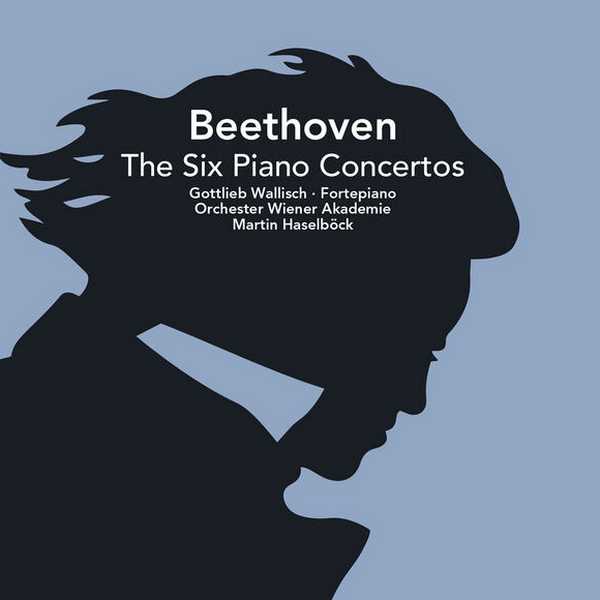
Composer: Ludwig van Beethoven
Performer: Gottlieb Wallisch
Orchestra: Orchester Wiener Akademie
Conductor: Martin Haselböck
Number of Discs: 3
Format: FLAC (tracks)
Label: CPO
Catalogue: 555329-2
Release: 2020
Size: 736 MB
Recovery: +3%
Scan: yes
CD 01
Piano Concerto No. 1 in C Major, Op. 15
01. I. Allegro con brio
02. II. Largo
03. III. Rondo. Allegro
Piano Concerto No. 2 in B-Flat Major, Op. 19
04. I. Allegro con brio
05. II. Adagio
06. III. Rondo. Molto allegro
07. Rondo for Piano & Orchestra in B-Flat Major, WoO 6
CD 02
Piano Concerto No. 3 in C Minor, Op. 37
01. I. Allegro con brio
02. II. Largo
03. III. Rondo. Allegro
Piano Concerto No. 5 in E-Flat Major, Op. 73 “Emperor”
04. I. Allegro
05. II. Adagio un poco moto
06. III. Rondo. Allegro
CD 03
Piano Concerto No. 4 in G Major, Op. 58
01. I. Allegro moderato
02. II. Andante con moto
03. III. Rondo. Vivace
Piano Concerto in D Major, Op. 61a
04. I. Allegro ma non troppo
05. II. Larghetto
06. III. Rondo
“This project featuring the complete recording of Beethoven’s piano concertos on original Beethoven fortepianos has close ties to the performances at original historical sites in Vienna. During past years the concert series ‘Resound Beethoven’ has brought back Beethoven’s works to the places where they were originally performed. For Gottlieb Wallisch this was a unique experience, a veritable immersion in the sound world of Beethoven’s times: “The combination of the fortepiano sound with the original-sound orchestra results in a fascinating opportunity to shed new tonal light on Beethoven’s music and to understand it in new ways. The sound of this fortepiano from the period around 1820 captivates the listener with its special color in the various registers and its elegant purity while already discreetly looking into the future with its somewhat greater volume.” Beethoven’s transcription of his Violin Concerto op. 61 for piano and orchestra – in music history the rare case of a transfer of a work from a stringed instrument to a keyboard instrument – gains authenticity and musical logic through performance on the fortepiano. His Rondo WoO is heard in a first-time recording; it originally formed the concluding movement of his Piano Concerto No. 2.”